Latest News


Job Description
Omicsoft is seeking a highly motivated and experienced genomics scientist who can contribute his/her own unique perspectives to our collective understanding of genomics data for biomedical researches. The position will be based in Cary, North Carolina with the primary responsibility to understand genomics data from varied disease areas, and to develop data analysis plans/pipelines to generate biological meaningful results and visualizations. By collaboratively working with internal research and development team, the successful candidate will integrate acquired knowledge into our efforts to provide great genomics knowledge products to our clients.
Key Responsibilities Include
  1. Collaborate with colleagues to understand our clients’ interests and biological questions
  2. Develop data analysis strategies and plans to address clients’ need.
  3. Perform data analysis on genomics data sets using Omicsoft products as well as other bioinformatics and statistical tools.
  4. Prepare presentations to summarize findings and train customers
  5. Training customers to explore data and answer biological questions using ArrayLand
  6. Other data analysis and bioinformatics researches funded by clients

Basic Qualification
  1. PhD degree in Bioinformatics, Biology or related fields, or Masters with minimum 2 years post-graduate work experience
  2. Understanding of basic biology and cancer biology

Preferred Qualifications
  1. Experience in the fields of genomics and bioinformatics data analysis
  2. Experience with R, Python or Java, Unix/Linux/HPC is a plus
  3. Enjoys working in collaborative team environment
  4. Strong written and oral communication skills to present scientific data and methods
  5. Experience in cancer research and drug development is a plus


Description: 

What it is: an ortholog and paralog prediction algorithm that provides interactive visualizations of the ortholog/paralog clusters 
What it does: SPOCS is designed to identify orthologous and paralogous proteins from a group of closely related prokaryotes, and to provide a visualization of the homologous relationships between proteins. The software will merge reciprocal best BLAST hits between pairs of species, generating undirected graphs, i.e., clusters of orthologs and paralogs, then identify the cliques from these undirected graphs. The visualization of the orthologous clusters and cliques can be enhanced by overlaying experimental data from gene or protein expression experiments. 

Species Paralogy and Orthology Clique Solver (SPOCS) is a graph-based ortholog/paralog prediction tool that will predict orthologs and paralogs given a set of prokaryotic proteomes (the set of proteins encoded by a genome). The software will take a set of protein fasta files (one per species genome), and an optional additional fasta to serve as an outgroup (a species that should be more distantly related to the species of interest than any of the species of interest are to each other). BLAST is required to generate the reciprocal best hit results for every pair of species. SPOCS then merges these results identifying orthologs using the graph-based concept of cliques. Detailed installation instructions are included in the download. 

Availability
SPOCS can be run using our web application here. The software is also freely available for installation on Linux systems, under an open source license. The license can be viewed here, and is also included in the User Guide and the software README file. Downloading the software from the “Mac OSX/Linux Download” button below constitutes your acceptance of these license terms.

Mac OSX/Linux Download
User Guide Download


Abstract
Motivation: Genomic repositories are rapidly growing, as witnessed by the 1000 Genomes or the UK10K projects. Hence, compression of multiple genomes of the same species is becoming an active research area in the last years. The well-known large redundancy in human sequences is not easy to exploit because of huge memory requirements from traditional compression algorithms.
Results: We show how to obtain several times higher compression ratio than of the best reported results, on two large genome collections (1092 human and 775 plant genomes). Our input are VCF files restricted to their essential fields. More precisely, our novel LZ-style compression algorithm squeezes a single human genome to about 400KB. The key to high compression is to look for similarities across the whole collection, not just against one reference sequence, what is typical for existing solutions.
Availability: http://sun.aei.polsl.pl/tgc(also as Supplementary material) under a free license.
Supplementary data:available at Bioinformatics online.

Contact: sebastian.deorowicz@polsl.pl


Source: Techcrunch
Dr. Pollard will share her experience at the cutting edge of scientific research, as founder and faculty supervisor of the Gladstone Bioinformatics Core and an associate professor at the Institute for Human Genetics at the University of California, San Francisco. Pollard’s lab is known for developing statistical and computational methods that enable the analysis and study of massive genomic datasets. With her research focusing on genome evolution and the relationship between DNA sequences and biomedical traits, Pollard’s work has important implications for how science identifies and treats a wide range of diseases, from AIDS to atherosclerosis.
Together, Tecco, Douglas, Kaplan and Pollard will talk about how they are building their own businesses, what they’ve learned and how they plan to leverage the changes in technology to build a healthier world.

The conference starts September 7th and runs until the 11th at our favorite location, the San Francisco Design Concourse. Stay tuned for more speaker announcements and a few surprises to be announced soon.


Abstract

The regulation of gene expression in cells, including by microRNAs (miRNAs), is a dynamic process. Current methods for identifying miRNA targets by combining sequence and miRNA and mRNA expression data do not adequately use the temporal information and thus miss important miRNAs and their targets. We developed the MIRna Dynamic Regulatory Events Miner (mirDREM), a probabilistic modeling method that uses input–output hidden Markov models to reconstruct dynamic regulatory networks that explain how temporal gene expression is jointly regulated by miRNAs and transcription factors. We measured miRNA and mRNA expression for postnatal lung development in mice and used mirDREM to study the regulation of this process. The reconstructed dynamic network correctly identified known miRNAs and transcription factors. The method has also provided predictions about additional miRNAs regulating this process and the specific developmental phases they regulate, several of which were experimentally validated. Our analysis uncovered links between miRNAs involved in lung development and differentially expressed miRNAs in idiopathic pulmonary fibrosis patients, some of which we have experimentally validated using proliferation assays. These results indicate that some disease progression pathways in idiopathic pulmonary fibrosis may represent partial reversal of lung differentiation.


originally published in

published by:Simon Harold 

The low cost computing hardware Raspberry Pi is now being used to train the next generation of computational biologists, and is proving to be a low-cost alternative to more traditional methods of learning.
Bioinformatics is great and shouldn’t be limited to one small module” was the reaction of one enthusiastic undergraduate at the University of St Andrews (UK), following the 7 week teaching course entitled 4273 π Bioinformatics for Biologists.

They are of course correct on both counts.
Bioinformatics, or some variant of computational biology, arguably underpins a majority of modern basic biological analysis, and is working its way steadily into the realms of clinical and translational science. Think of the software you use to align your DNA sequences, infer genetic structure in your populations, or model the conformations of your newly crystallized protein. All are made possible because someone, somewhere, coded them into existence. Yet how many of us could code even a basic program of this type?

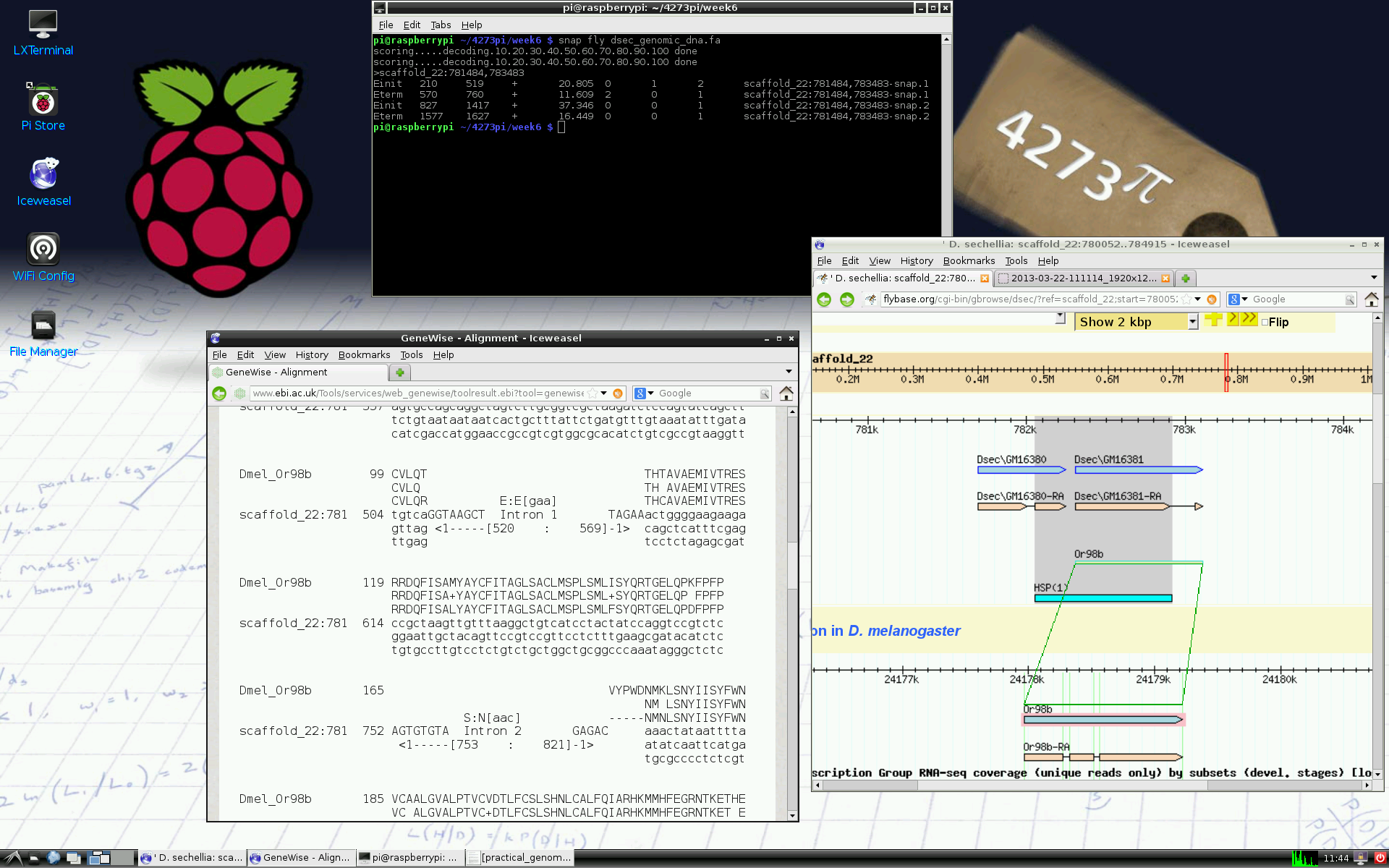
Fig1 Barker et al BMC Bioinfo (2013) 14, 243

One difficulty that contributes to this issue is teaching. Few university courses exist that offer dedicated training in bioinformatics, with researchers coming to the subject either as biologists with an interest in computation, or computational scientists with an interest in biology. Although there may not be a problem with bioinformaticians coming to the field through either of these routes, training the average bench biologist or early-career researcher to have basic skills in the field can be difficult. This is partly down to the diversity of subject areas to which computational skills need to be applied.

Speaking to Biome magazine, Ian Korf, Associate Director of Bioinformatics at the Genome Center at University of California, Davis, sees teaching such diversity as a real issue for university courses “One of the greatest obstacles to teaching bioinformatics is the teachers themselves. Bioinformatics is an eclectic field drawing from molecular biology, statistics, computer science, mathematics and other disciplines. Not many teachers have such a diverse education.”
Another problem is infrastructure. Whilst some universities may have access to vast computing power for researchers, gaining access to servers that allow students to experience administrative privileges, or simply give them the time to experiment with basic computational architecture, can often be problematic.
Now, an open access, open learning method developed by Daniel Barker and colleagues aims to strip this teaching back to basics by using the newly-developed Raspberry Pi computing system to let students experience full administrator rights and gain valuable insights into real-world bioinformatics. The low-costs involved (each computer typically costs around £30/$40/€35) also means that large-scale teaching may be achieved without university costing departments having to worry about whether their laptops will be returned in full working order at the end of the semester.

What’s in the Pi?
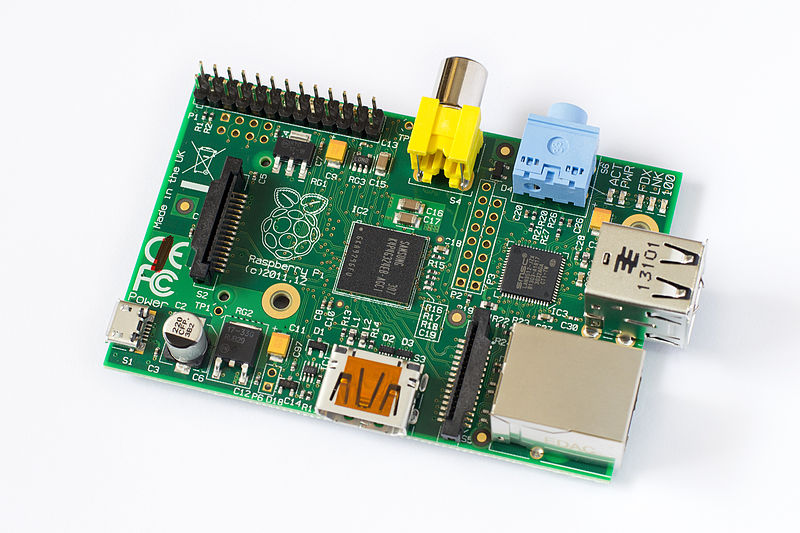
Raspberry Pi Model B Rev 2_Tors_Wikimedia commons cc
The hardware costs stay so low because the Raspberry Pi strips computing back to its basic elements. This credit-card sized computer eschews the modern movement toward bigger, faster processing by using a basic single-board device running an open-source operating system, without the usual hardware features like disk-drives and keyboards. Developed by a non-profit, British-based company, it is now being hailed as a revolutionary tool in facilitating mass-participation in home programming.
As well as some of the more frivolous uses to which the device can be applied, it is hoped that this low cost could not only pique a new generation’s interest in the anatomy of computing, but could also have much broader implications for access to teaching computation in the developing world. Barker feels that key to this is empowering the bench-scientist to lose their fear of the motherboard:
“Many would-be bioinformaticians get scared away because of the arcane syntax of the command line, their lack of computer programming experience, or a feeling that their mathematics skills are insufficient. These are just fears. If you hold their hand for a little while they can get through the scary bits, they will emerge on the other side self-empowered and with a new perspective on problem solving. It will impact everything from grocery shopping to genome analysis.”
A key part of this will be openness. Although developed specifically to run the bioinformatics teaching course at the University of St Andrews, Barker and colleagues acknowledge that thephilosophy of openness encouraged by this new hardware also needs to be translated into teaching, and have made the course fully available to anyone wanting to have a go if they wished: full course details can be downloaded as an additional file from their article in BMC Bioinformatics.


Fully-funded 3 year position, starting as soon as possible

The opportunity
Recent breakthroughs in sequencing technologies are transforming biosciences. Increasingly, individual laboratories perform de novo genome and transcriptome sequencing efforts. But due to the relatively short length of current reads, assembly remains challenging. The problem is particularly acute with plant genomes because of their large size, polyploidy, and massive gene expansions and contractions.
The successful applicant will contribute to on-going efforts in the lab to exploit orthologous sequences in closely related species to identify split and incomplete genes in draft genome and transcriptome assemblies.
The project is part of a larger collaboration between the Dessimoz Lab at UCL and Bayer CropScience NV (Ghent, Belgium), leading agronomical company, for the development of new methods and resources to better characterise evolutionary and functional relationships between model plant genomes and agronomically-relevant crop genomes. This project will enable more effective crop biotechnology, which is key to ensure food security and sustainable agriculture.
The successful applicant will be provided with strong mentorship and be given ample scientific training opportunities. She or he will based at UCL in the Bloomsbury area of London, but will have the opportunity to do short-term visits to the collaborator in Ghent.
The successful applicant will receive a tax-free stipend of currently £15,726 per annum. There will be additional opportunities to be sponsored for attending international conferences. The PhD study fees will be covered by the project (UK/EU rates).
Profile Sought
  1. Strong (first or upper second class) undergraduate or postgraduate degree in quantitative discipline (bioinformatics, computer science, statistics, mathematics, or related subjects)
  2. High degree of self-motivation
  3. Good ability to work independently and as part of a team
  4. Effective written and oral communication skills
  5. Demonstrated programming skills
  6. Ideally, prior experience in computational biology research

Applicants must be either UK/EU/Swiss nationals or resident in the UK for three years prior to starting the PhD.
How to apply
To apply, please send the following documents as single PDF by email to Dr Christophe Dessimoz (c.dessimoz at ucl.ac.uk):
  1. a covering letter highlighting your reasons for applying and your suitability for this studentship
  2. a copy of your CV
  3. the names and contact details of 2-3 references
  4. if available, links to your Bachelor or Master thesis, publications, code projects (e.g. GitHub repo) are appreciated

To ensure full consideration, applications should be received by 16 Sep 2013 at 5pm UK time.
  • For informal enquiries, please contact Dr Dessimoz to this above address.